Originally published on September 10, 2025
We drove over to Nuremberg today, aiming to explore the old town, or Altstadt. Parking turned into a bit of an adventure—let’s just say the ramp we chose landed us smack in the middle of the red-light district. Whoops! Nod, wink, grin. From there, we walked into the heart of the city.
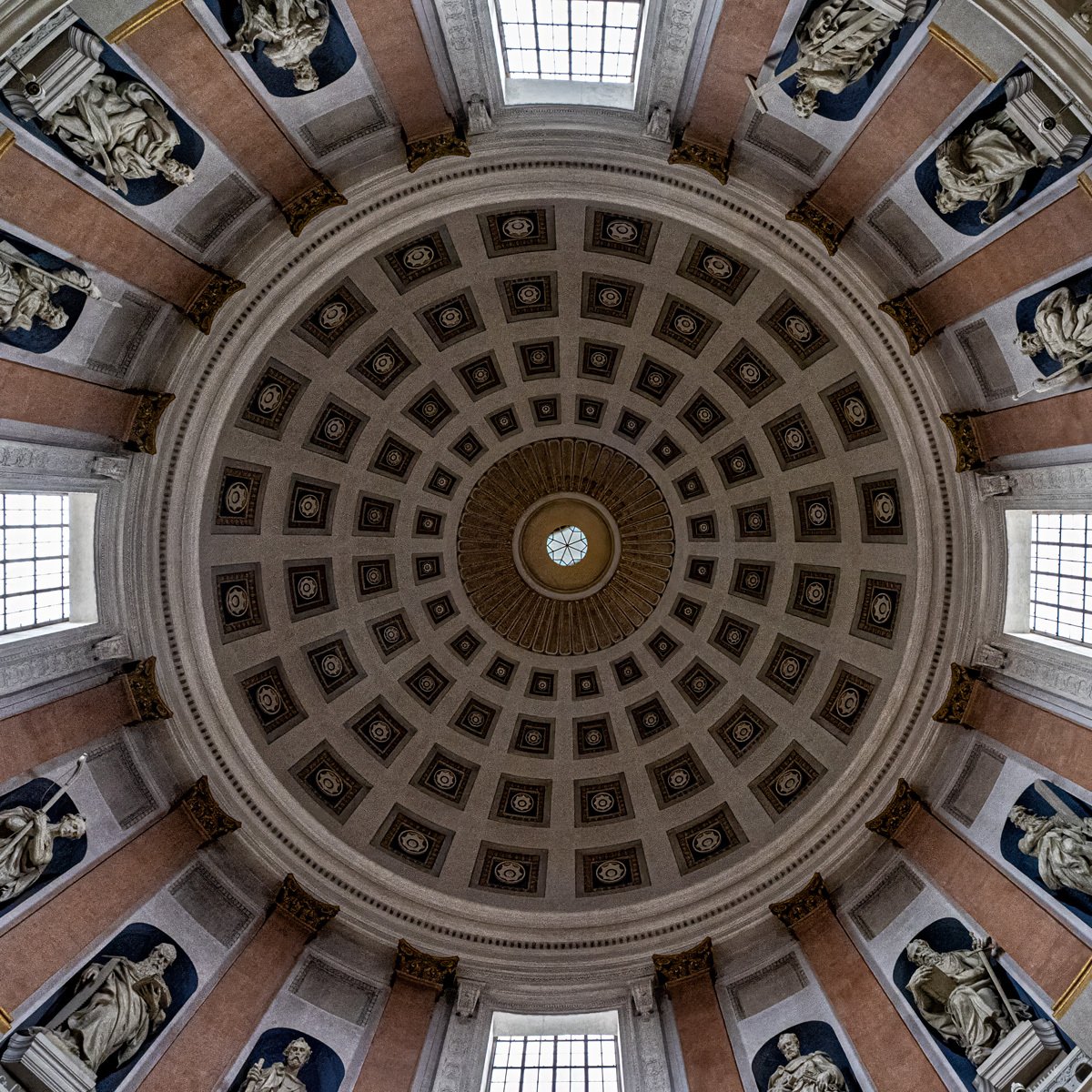
Our first stop was St. Jacob’s Church, originally built in the 14th century as a church for pilgrims on the Way of St. James. Its calm interior gave us a peaceful start to the day. From there we crossed over to St. Elizabeth’s Church, an impressive baroque structure with a huge green dome, built in the 18th century for the city’s Catholic community after centuries of Lutheran dominance.
We made our way to the market square, Hauptmarkt, where we hopped on one of those goofy little tourist trains. Say what you will, they’re great for giving tired feet a break. The ride gave us a good look around a city that seems to be in perpetual reconstruction—scaffolding and cranes everywhere. But that’s also Nuremberg’s story: about 90% of it was destroyed in World War II, and the city has been rebuilding ever since.
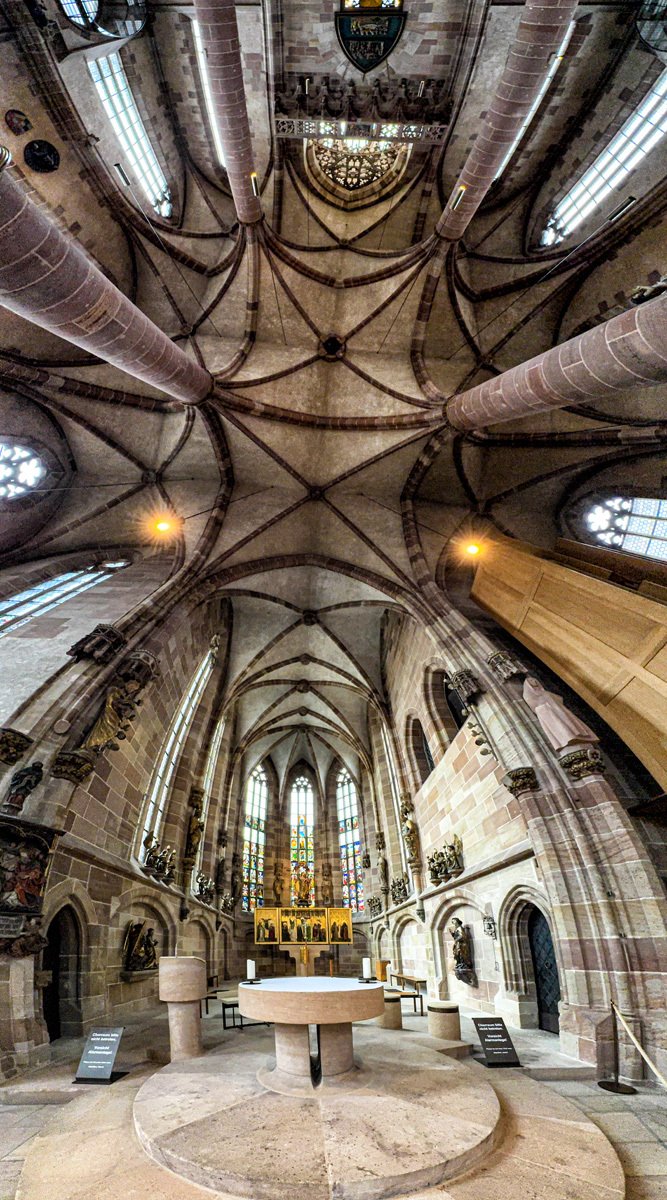
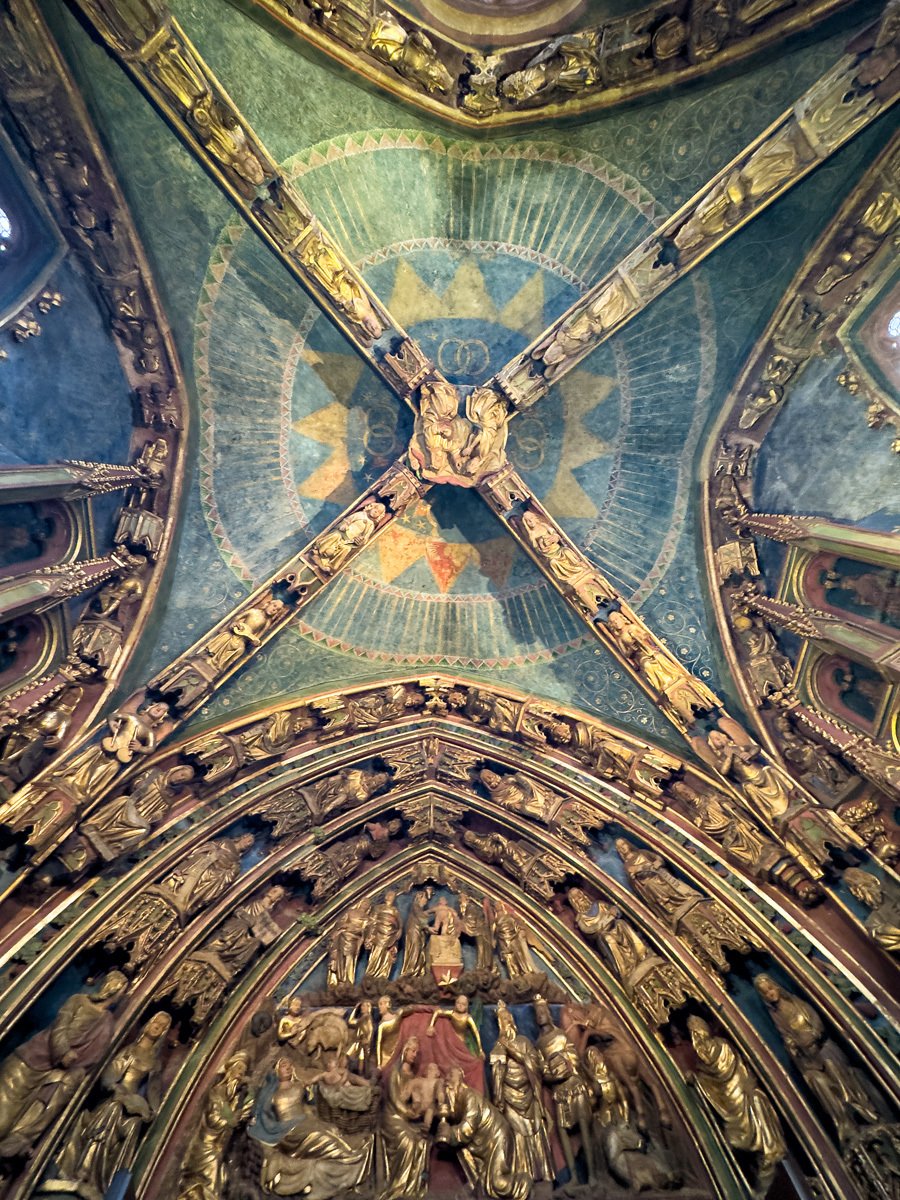
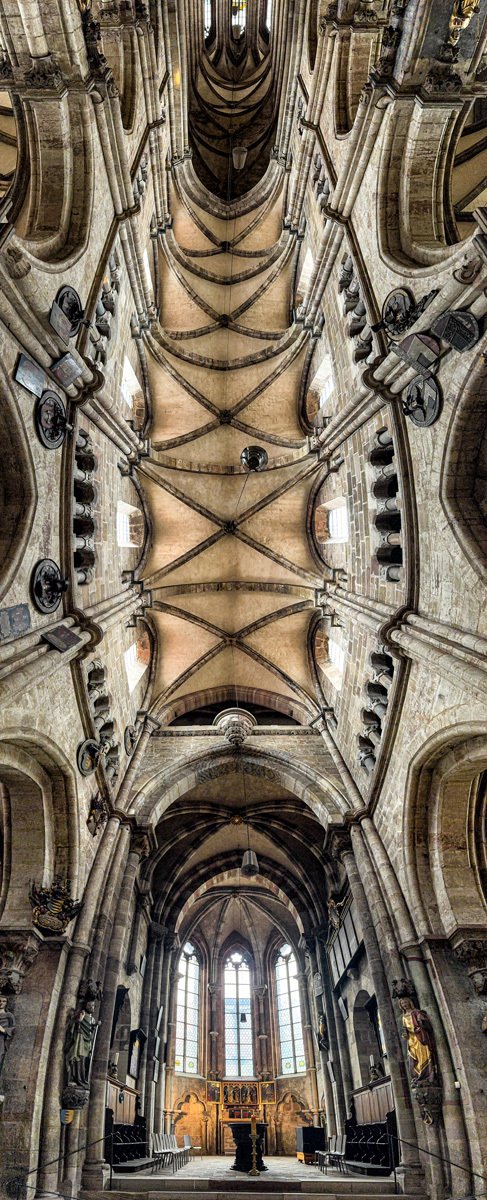
Back on foot, we visited St. Sebaldus Church, the city’s oldest parish church, begun in the 13th century. This one was my favorite—you could really feel the layers of history inside, from medieval relics to wartime scars. We also stopped at St. Lorenz Church, a grand Gothic masterpiece with towering spires and one of the finest medieval art collections in Germany, including the famous Annunciation by Veit Stoss.
We wrapped up with a wander through the castle grounds, perched above the city. The Imperial Castle was once one of the most important seats of power in the Holy Roman Empire, and you can see why—it dominates the skyline and offers sweeping views over the old town. After that, it was time to face Nuremberg’s rush-hour traffic (not for the faint of heart!) before heading back safe and sound. Tomorrow, we point the car toward Cologne.